
On-Grid vs Off-Grid Solar Systems: Which One Should You Choose?
Choosing the right solar system is a big decision that depends on your energy needs, location, budget, and lifestyle. This guide breaks down everything you need to know about on-grid and off-grid solar power systems — how they work, their benefits and drawbacks, and how to decide what fits your home or business best.
What Is an On-Grid Solar System?
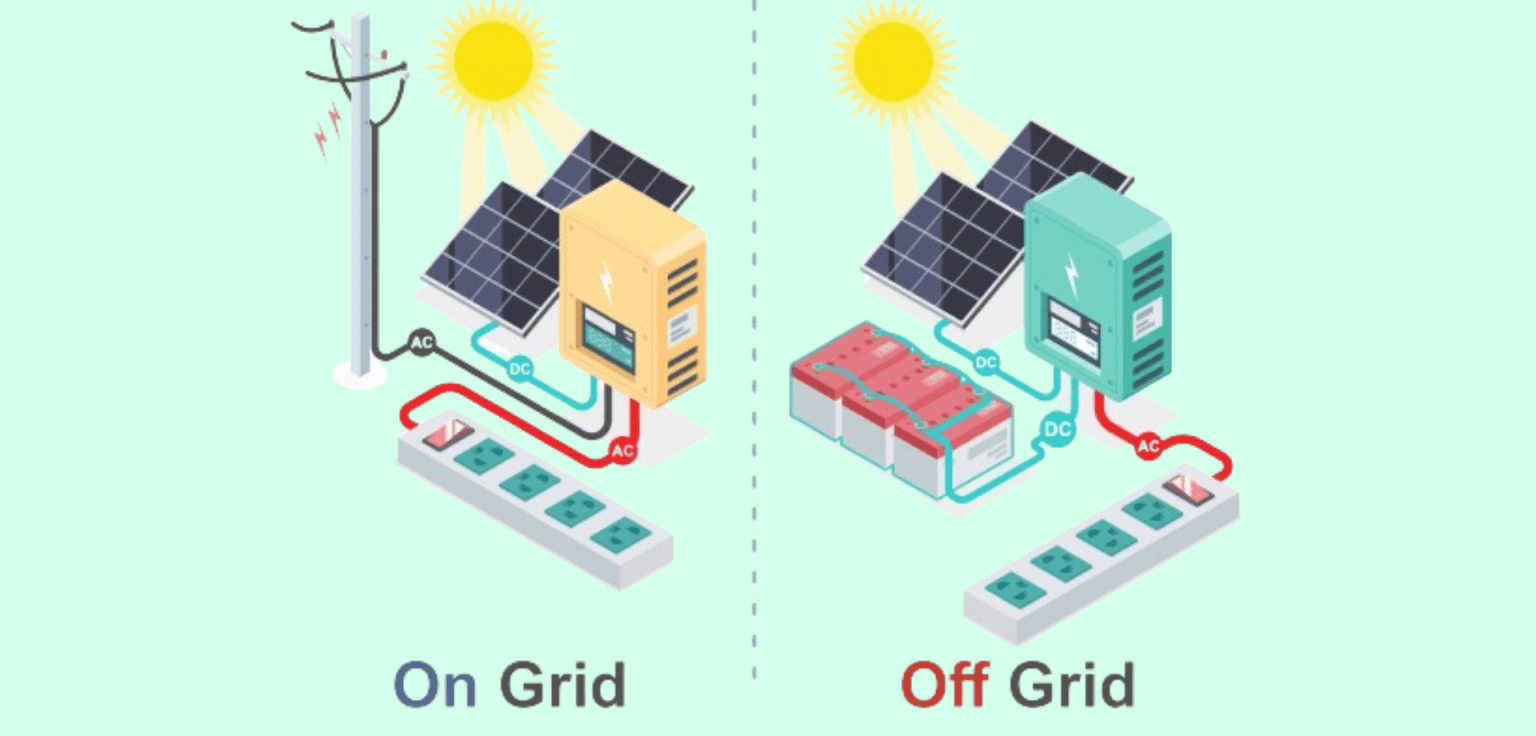
An on-grid solar system, also known as a grid-tied system, is connected to your local electricity grid. During the day, your solar panels generate electricity for your home. If you produce more than you use, the extra power is fed back into the grid, often earning you credits through net metering. When your solar panels aren’t producing enough—like at night—you draw electricity from the grid as usual.
Key features:
What Is an Off-Grid Solar System?
An off-grid solar system operates independently of the local electricity grid. It stores the energy your solar panels produce in batteries so you can use it any time. This system is ideal if you live in a remote area without grid access or want complete energy independence.
Key features:
How Do On-Grid and Off-Grid Systems Work?
| On-Grid System | Off-Grid System |
|---|---|
| Solar panels → Inverter → Home/Grid | Solar panels → Charge controller → Battery storage → Inverter → Home |
| Surplus electricity sent back to grid | Battery stores excess energy for later use |
| Uses grid when solar not producing | No reliance on grid |