On-Grid vs Off-Grid Solar Systems: Which One Should You Choose?

Choosing the right solar system is a big decision that depends on your energy needs, location, budget, and lifestyle. This guide breaks down everything you need to know about on-grid and off-grid solar power systems — how they work, their benefits and drawbacks, and how to decide what fits your home or business best.


What Is an On-Grid Solar System?

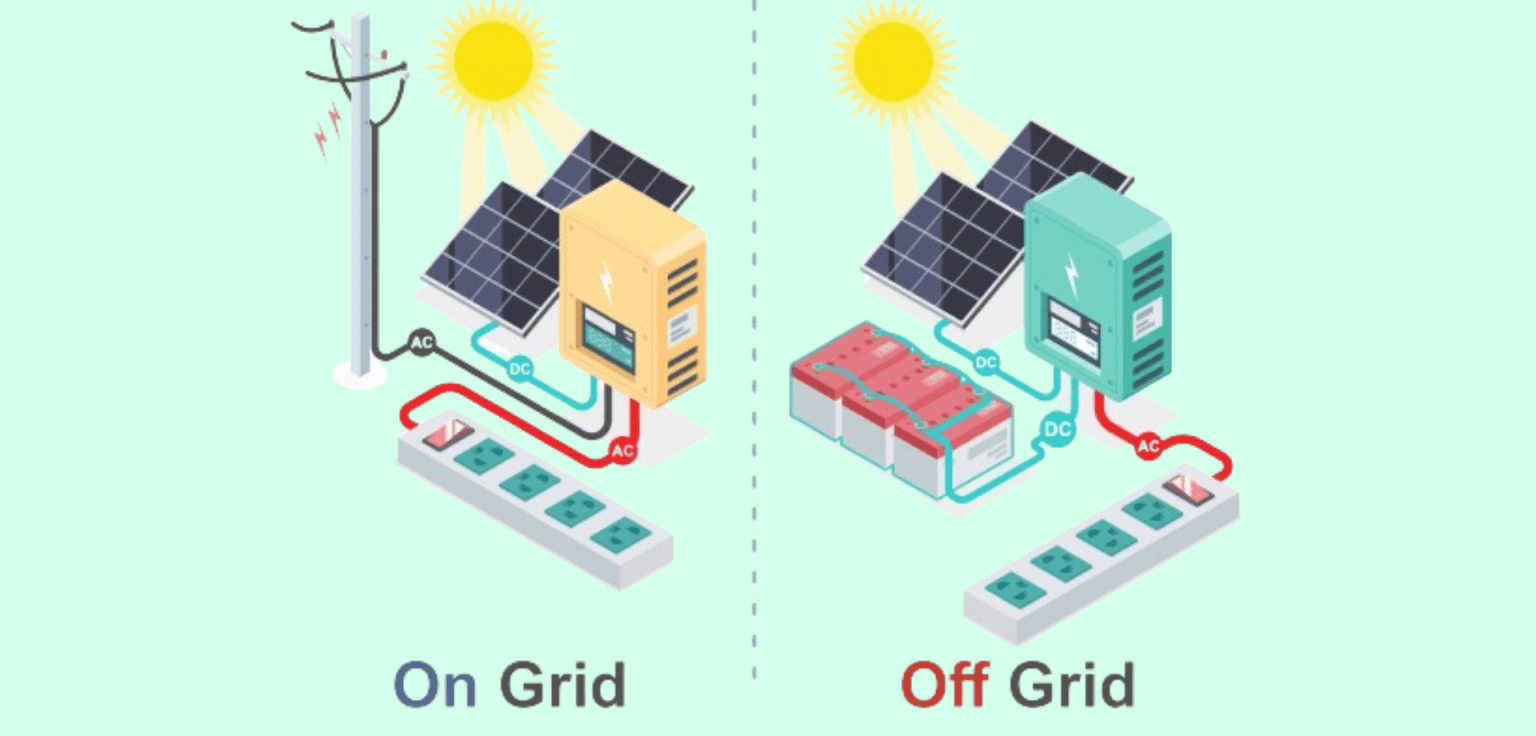
An on-grid solar system, also known as a grid-tied system, is connected to your local electricity grid. During the day, your solar panels generate electricity for your home. If you produce more than you use, the extra power is fed back into the grid, often earning you credits through net metering. When your solar panels aren’t producing enough—like at night—you draw electricity from the grid as usual.


Key features:
  • No batteries needed, which lowers upfront cost.
  • Saves money by offsetting electricity bills.
  • Works well where reliable grid power is available.

What Is an Off-Grid Solar System?

An off-grid solar system operates independently of the local electricity grid. It stores the energy your solar panels produce in batteries so you can use it any time. This system is ideal if you live in a remote area without grid access or want complete energy independence.


Key features:
  • Requires careful energy management to avoid outages.
  • Requires batteries for storage, increasing cost and maintenance.
  • Provides power anywhere, regardless of grid availability.

How Do On-Grid and Off-Grid Systems Work?

On-Grid System Off-Grid System
Solar panels → Inverter → Home/Grid Solar panels → Charge controller → Battery storage → Inverter → Home
Surplus electricity sent back to grid Battery stores excess energy for later use
Uses grid when solar not producing No reliance on grid

Advantages of On-Grid Solar Systems

  • Lower initial investment without batteries
  • Ability to earn credits via net metering
  • Simple installation and low maintenance
  • Ideal for urban and suburban homes
  • Advantages of Off-Grid Solar Systems

    • Complete energy independence
    • Great for remote or rural areas without grid access
    • No electricity bills at all

    Disadvantages of On-Grid Solar Systems

    • No power during grid outages unless paired with battery backup
    • Dependent on grid reliability and net metering policies

    Disadvantages of Off-Grid Solar Systems

    • Higher upfront cost due to batteries and storage systems
    • Battery maintenance and replacement costs
    • Requires careful planning to meet energy demands

    What Is a Hybrid Solar System?

    A hybrid solar system combines the best of both worlds. It connects to the grid but also includes battery storage. You can store excess energy for backup during outages or when solar production is low, while still benefiting from net metering and grid power.

    Factors to Consider When Choosing On-Grid or Off-Grid Systems

    • Grid availability and reliability in your area
    • Budget for upfront and ongoing costs
    • Your energy consumption patterns
    • Importance of energy independence
    • Local government incentives and policies

    Final Thoughts: Which Solar System Is Right for You?

    If you have reliable grid access and want to save on electricity bills, an on-grid solar system is usually the best choice. If you live off the grid or want full independence from utilities, an off-grid system with batteries makes sense. For those who want flexibility and backup power, a hybrid solar system is ideal.

    Ready to make the switch to solar? Contact a trusted solar panel company today to evaluate your needs and get a tailored solution.